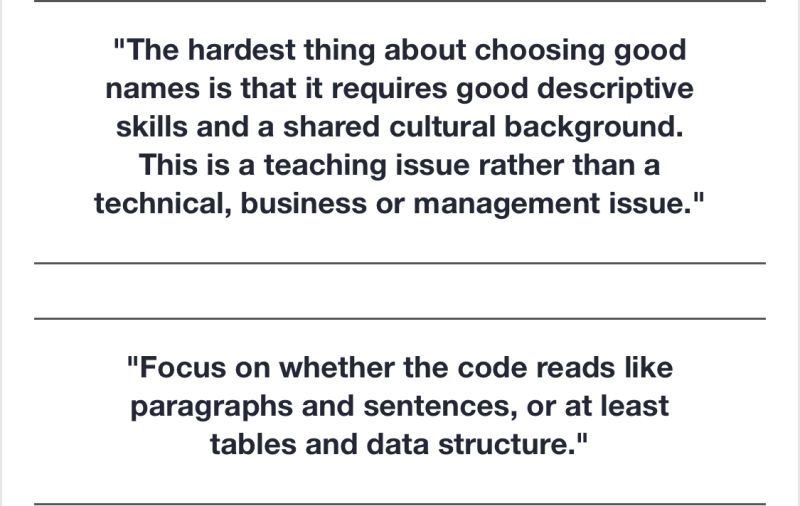
Naming #3 — The Clean Code way
💡From the Clean Code book (and others), we can adopt a few rules that help us name things better in software.
Here are some of them:
- Use Intention-Revealing Names:
☝️If you need to put a comment to explain what a class, method, or variable does or means, then you have not put enough effort into naming it.
For example, instead of naming a variable 'data', consider using a more descriptive name such as 'customerInfo' or 'orderDetails' to reveal the intention of the variable.
- Avoid Disinformation and Encodings:
❌Avoid names like 'memberStringCounter', 'IAuthProvider', 'AccountsList', 'BooksArray', and 'floatPercentage'.
✅Any IDE these days can inform about these in an efficient way.
- Make Meaningful Distinctions:
⚒Using distinct and meaningful names makes it easier for other developers to understand the code, reduces the chance of naming conflicts, and helps maintain code readability and maintainability over time.
For example,
❌what is the difference between 'product', 'productInfo', and 'productData'? Just be more expressive.
- Don’t name it in a way that you can’t pronounce it:
☝️Being able to pronounce names makes it easier to discuss the code with other developers and helps prevent misunderstandings or mistakes when communicating about the code.
For example,
❌instead of using names like 'CreatedAtDdMmYyyy' or 'calcPersTot',
✅consider using more readable names like 'dateOfCreation' or 'calculatePersonalTotal'.
- Use Searchable Names:
Using names like 'is', 'Id', and other common patterns can be helpful, but avoid using single-letter variables (except inside a function locally) or magic numbers inlined in the code.
❌Using magic numbers is discouraged because it makes the code less maintainable and harder to read.
✅Instead, consider using named constants or enumerations.
💡So, let's face it: naming things is hard. But with a little creativity and a lot of patience, we can hopefully avoid any more misunderstandings caused by software jargon.
And who knows, maybe we'll even come up with a new acronym for "Simplify Things, Please" (STP).